NIST Just Put AI Agent Security on the CEO Agenda
If an agent can act inside your systems, incident readiness becomes a governance ritual, not an IT ticket.
The signal
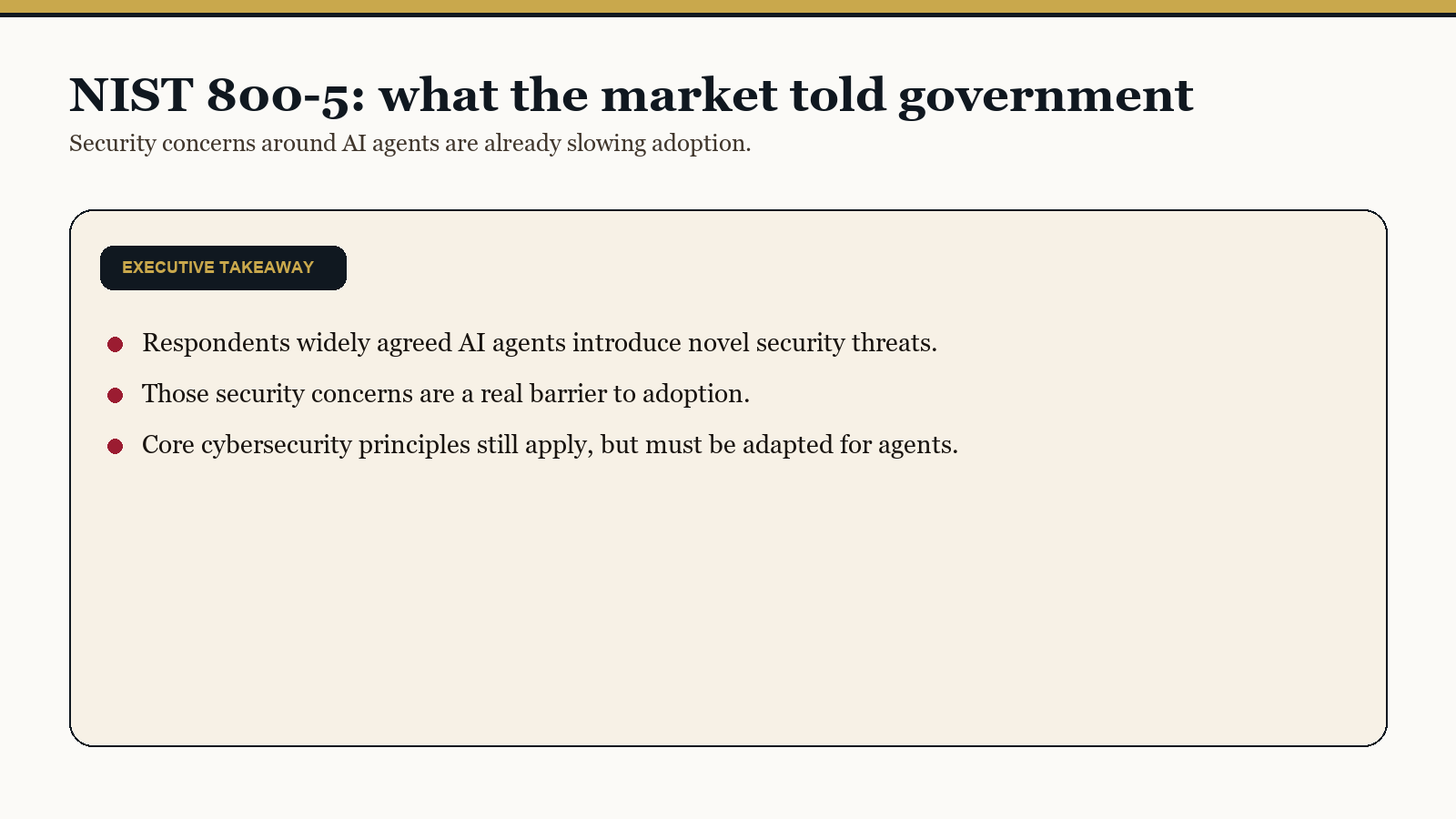
On May 18, 2026, NIST published a summary analysis of responses to a U.S. Center for AI Standards and Innovation request for information on AI agent security. Their synthesis is blunt: commenters broadly agree AI agents introduce novel security threats, and those concerns are already a barrier to adoption.
That matters because 2026 is the year many executive teams will move from copilots to agents. You are no longer just buying a model. You are delegating work. Delegation creates new failure modes: the agent can take action, chain tools, and persist state.
This is not a reason to pause adoption. It is a reason to stop pretending your existing cybersecurity and risk rituals are automatically sufficient. NIST is telling the market that fundamental principles still apply, but they must be adapted for agents.
Why boards should care now
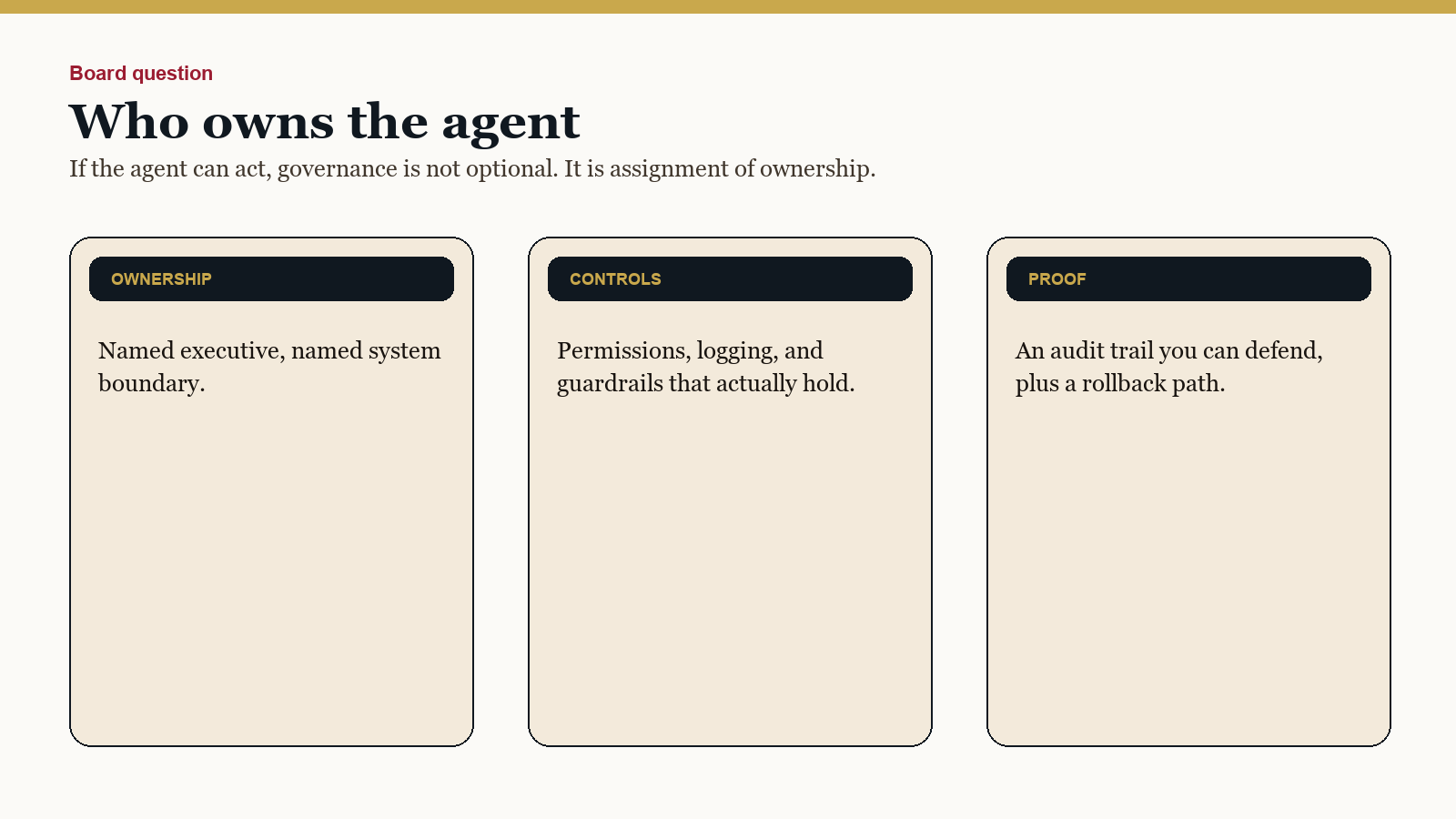
Boards do not govern technology. Boards govern exposure and accountability.
AI agents turn two old questions into one new one. Old question one: can we secure the system. Old question two: can we trust the operator. New question: when the operator is software, who owns the operator’s judgment, permissions, and rollback.
If your organization is deploying agents, the board should assume the first serious incident will not be a dramatic model jailbreak story. It will be something operational and embarrassing: the agent touched the wrong system, retained the wrong data, escalated privileges, or created an audit trail you cannot defend.
The practical move: agent incident management becomes a leadership ritual
NIST hosted an AI incident management workshop on May 14, 2026. The premise is straightforward: as AI systems become integral to critical infrastructure and cybersecurity, a new class of incidents is emerging where AI systems are both targets and sources of risk.
Executives should translate this into a simple operating requirement: if an agent can take action, you need an incident path that is designed for agent failures, not retrofitted after one happens.
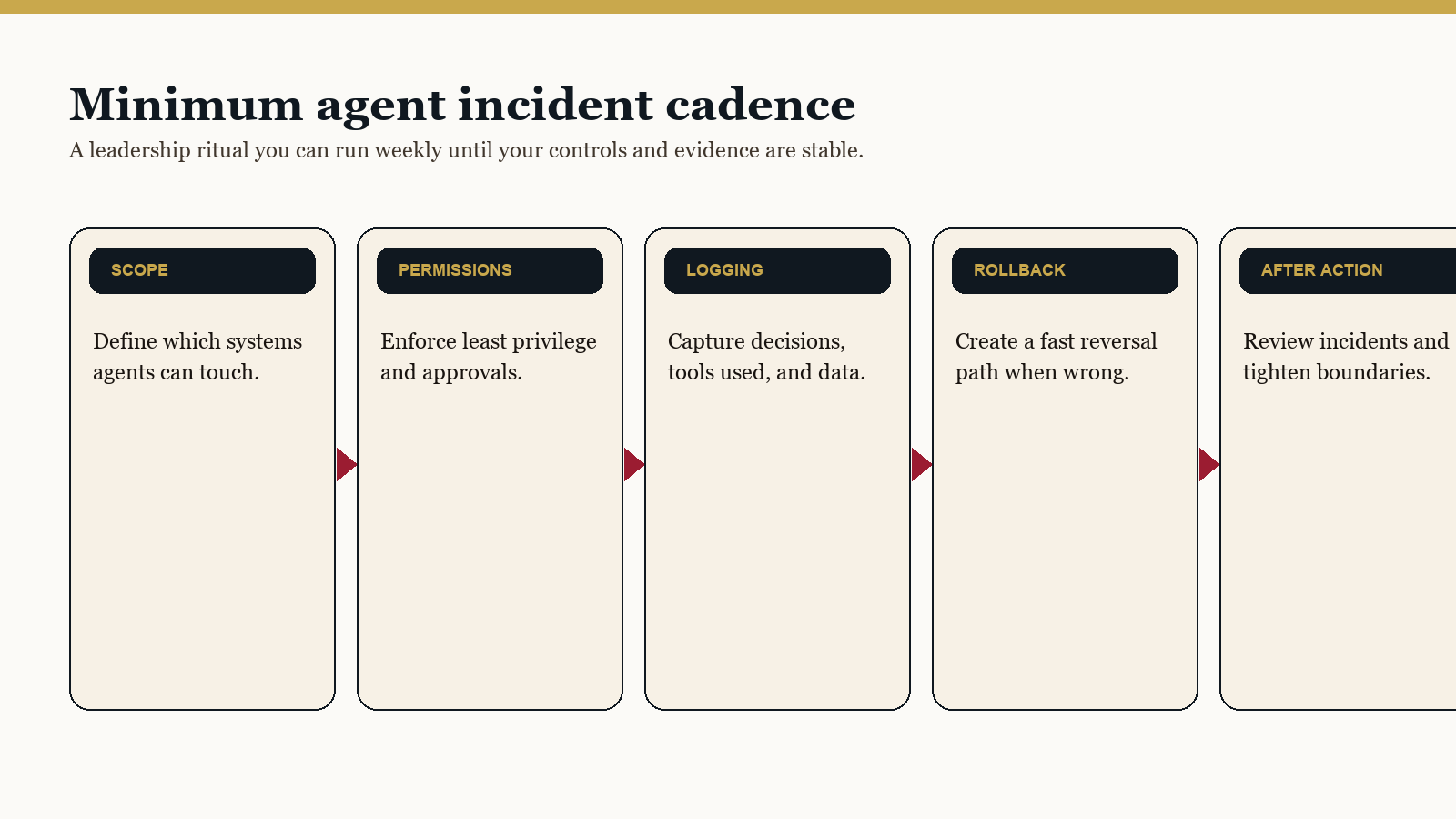
For most leadership teams, the near term answer is not a new committee. It is a tighter set of operating questions that become routine:
First: what systems can agents touch, and what systems are off limits.
Second: what permissions model is enforced, and who can override it.
Third: what logs exist that prove what the agent did and why it did it.
Fourth: what is the rollback path when an agent makes a plausible but wrong decision.
Primary sources
NIST, “Summary Analysis of Responses to the Request for Information Regarding Security Considerations for AI Agents” (Published May 18, 2026), report number 800-5. Read the publication.
NIST, “NIST Workshop on AI Incident Management” (May 14, 2026). Read the event page.
If you are deploying agents, the governance question is not adoption. It is which rituals changed and who owns the proof. The diagnostic shows the highest-risk gap to close first.