The Wrong Proof
BOQ shows what serious AI proof has to capture. AI usage is not transformation. Ritual compression is.
BOQ Group gets the facts right and misses the lesson entirely if we read it as a Copilot story.
The public evidence is useful. Business risk reviews moved from three weeks to one day. Training program creation moved from three weeks to one day. Report sign-off moved from four weeks to one week. Root cause analysis analyst time fell by 51.8%, while finding quality improved by 22%.
Those numbers matter.
But the lesson is not that Microsoft 365 Copilot saves time.
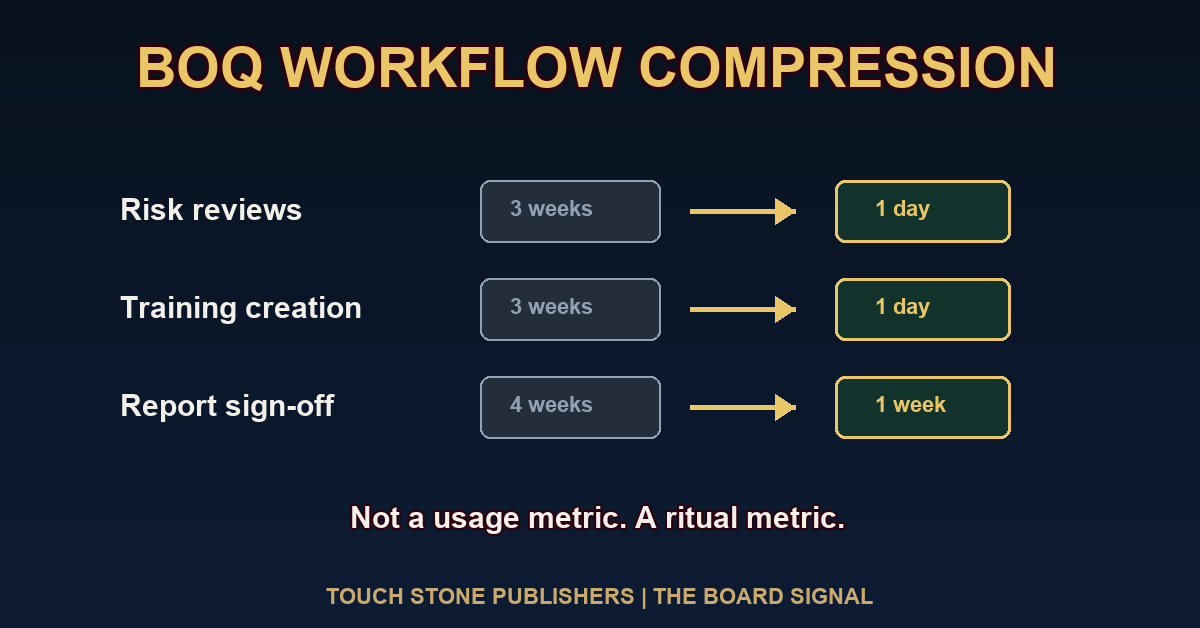
The lesson is that recurring work rituals can compress when AI enters the operating cadence instead of sitting at the edge as a productivity accessory.
That distinction matters because boards are about to be shown a great deal of AI activity that looks impressive and proves very little.
License adoption proves activity.
Prompt usage proves experimentation.
Minutes saved proves convenience.
None of those prove that the organization changed how decisions move.
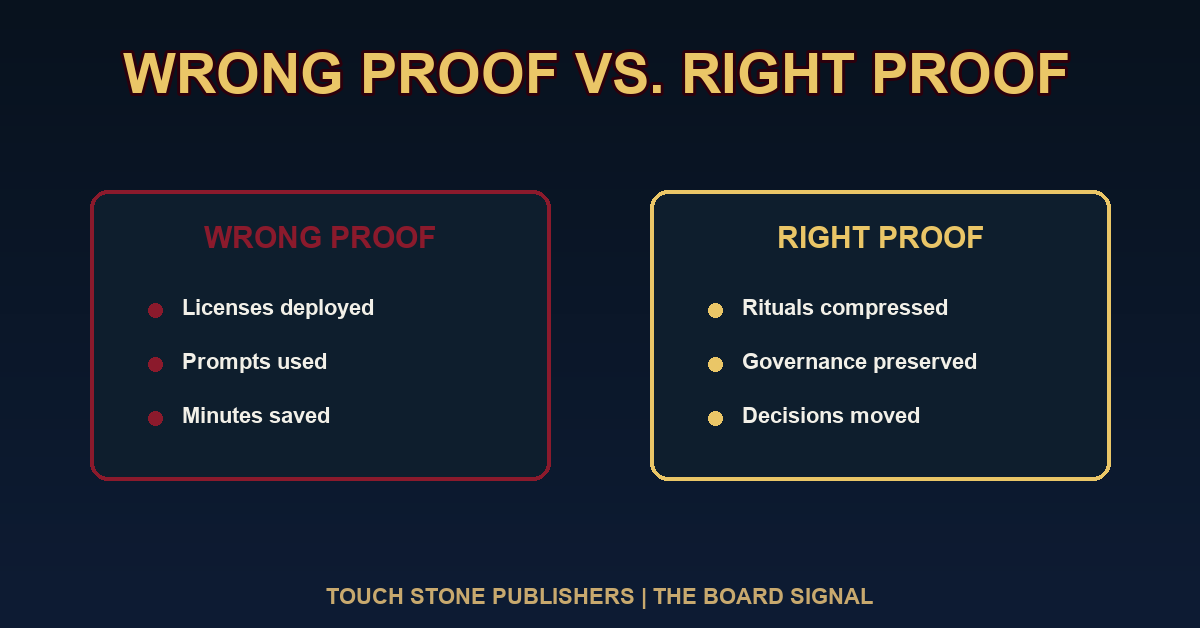
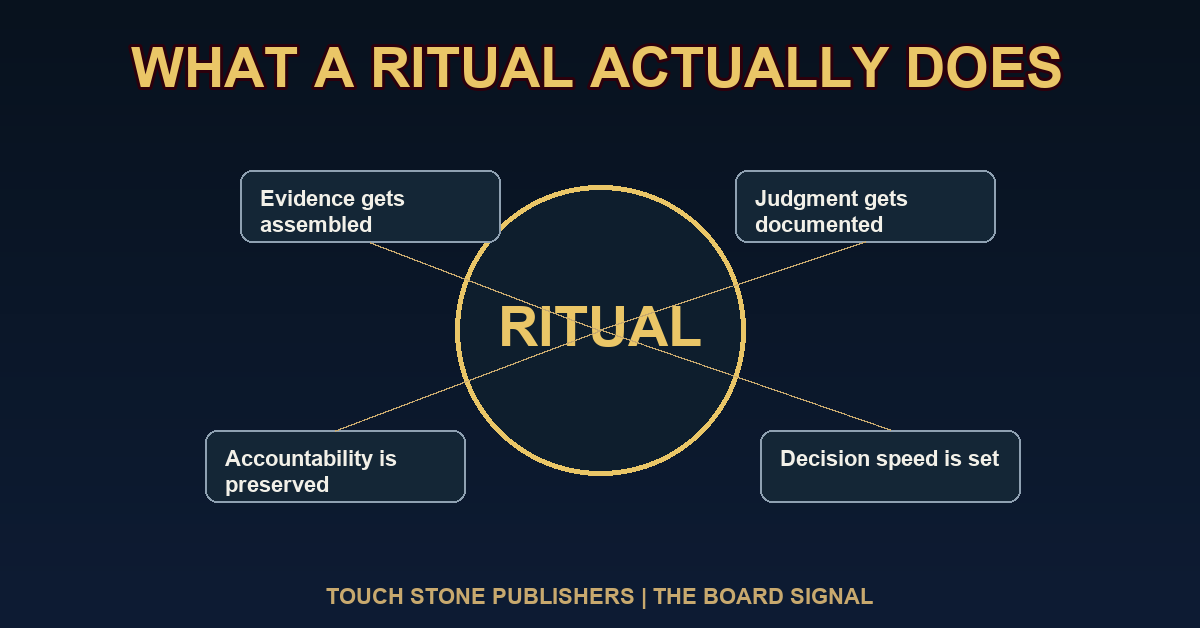
A ritual is not simply a process that repeats. It is a process whose repetition determines what evidence gets assembled, who interprets it, how judgment is documented, and how quickly a decision can safely move.
Risk review is a ritual.
Report sign-off is a ritual.
Training design is a ritual.
Root cause analysis is a ritual.
This is where most AI programs lose the plot.
They deploy a tool into the old ritual and call the usage curve transformation. Then the board sees a dashboard full of adoption signals and assumes the operating model is changing underneath.
Often it is not.
The meeting still works the same way. The review still works the same way. The performance conversation still rewards the same behavior. The escalation path still treats AI output as something to paste into the old process rather than something that forces the process to be redesigned.
The tool gets absorbed.
The culture does not move.
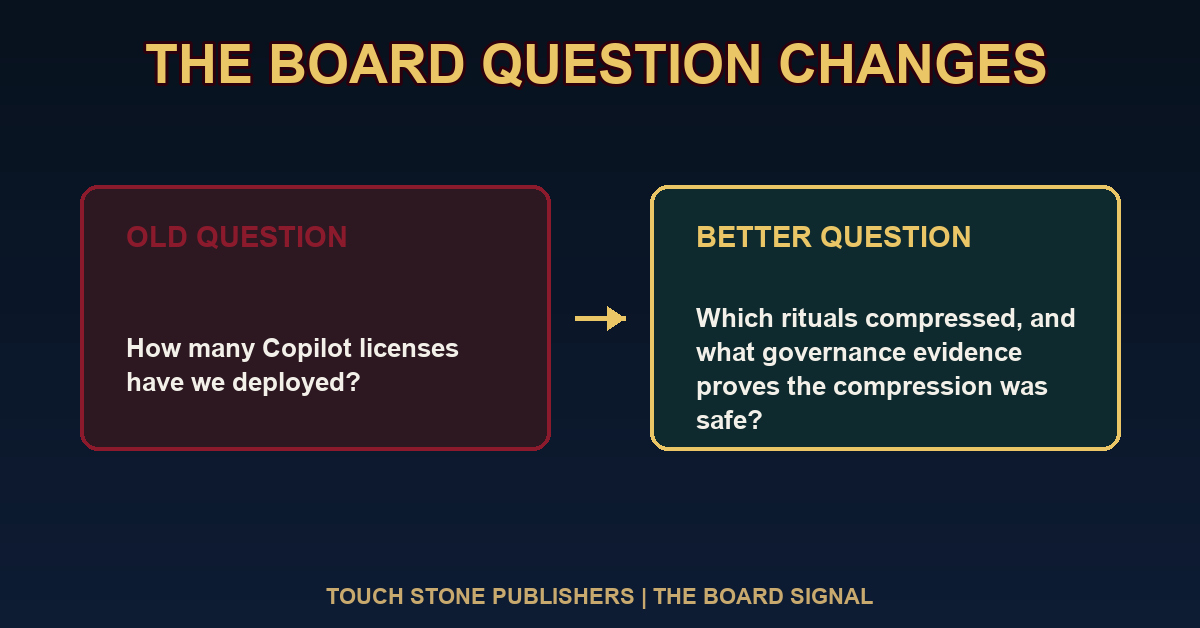
The CEO question is different from the board question.
The board has to ask whether the organization can prove that compressed work remains governed, documented, and safe.
The CEO has to ask which workflow still takes three weeks and should not.
The answer may not be a technology problem. It may be a ritual problem.
Someone has to map the work. Someone has to identify the anchor rituals. Someone has to decide where AI prepares the evidence, where humans interpret it, where back-testing occurs, and where the decision trail is preserved.
That is the difference between productivity theater and governance-grade transformation.
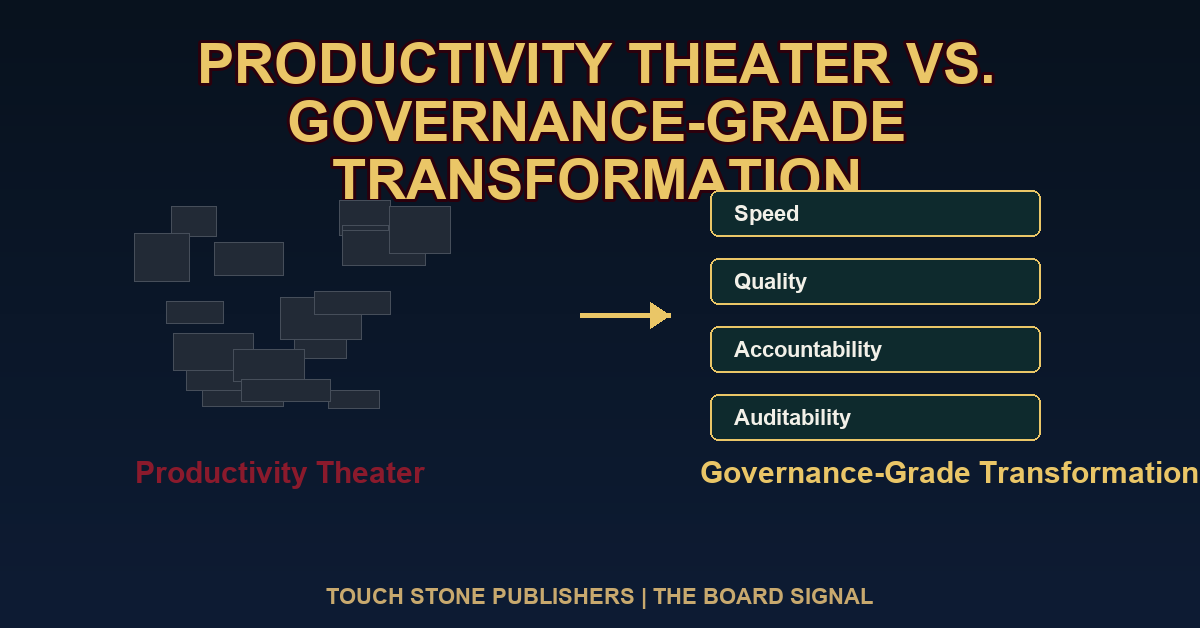
The CAIRO Framework exists for that gap.
BOQ is not a Touch Stone case study. It is public evidence. It does not prove Touch Stone delivery.
It proves the mechanism.
When AI is governed as an operating model intervention, rituals can compress. When AI is treated as a tool rollout, organizations collect adoption data and wonder why transformation did not arrive.
The next serious board conversation about AI should not start with usage.
It should start with the rituals.
Start with the AI Culture Maturity Diagnostic. It is built to show where adoption is stalling before the board mistakes activity for transformation.