

The best change readiness models for workforce adaptability include the ADKAR Model, Kotter’s 8-Step Change Model, and Lewin’s Change Management Model, which offer structured approaches to transformation. Further, the McKinsey 7-S Framework, Bridges’ Adjustment Model, Burke-Litwin Change Model, and Prosci’s Change Management Methodology stress strategic alignment, stakeholder engagement, and emotional adaptation. These frameworks provide analytical insights and collaborative techniques essential for maneuvering organizational change successfully. To explore the nuances of these models, one can enhance understanding.
Key Takeaways
- ADKAR Model emphasizes awareness and reinforcement to ensure sustainable change and workforce adaptability.
- Kotter’s 8-Step Model uses urgency and guiding coalitions to drive effective organizational transformation.
- Prosci’s Change Management Methodology addresses emotional aspects and leadership support for successful change.
- Lewin’s Model uses Unfreeze-Change-Refreeze stages to overcome resistance and solidify new practices.
- Bridges’ Transition Model highlights phases of transition, focusing on communication and support for smooth adaptation.
ADKAR Model

The ADKAR Model, a structured change management framework, offers a clear roadmap for fostering workforce adaptability. This model emphasizes five key stages: Awareness, Desire, Knowledge, Ability, and Reinforcement.
In the context of ADKAR awareness, the model underscores the importance of cultivating understanding among employees about the necessity and purpose of change. It strategically aligns communication efforts to guarantee alignment and receptivity across the organization.
Moving beyond initial acceptance, ADKAR reinforcement solidifies new behaviors and practices, guaranteeing long-term adoption and sustainability. By embedding reinforcement mechanisms, organizations can mitigate regression and foster a culture of continuous improvement.
The collaborative nature of ADKAR encourages stakeholders to engage actively, promoting a cohesive approach to change and facilitating a smoother shift towards new operational paradigms. For successful implementation of change, it is essential to establish clear expectations and provide regular feedback to ensure everyone is aligned with the new direction.
Kotter’s 8-Step Change Model
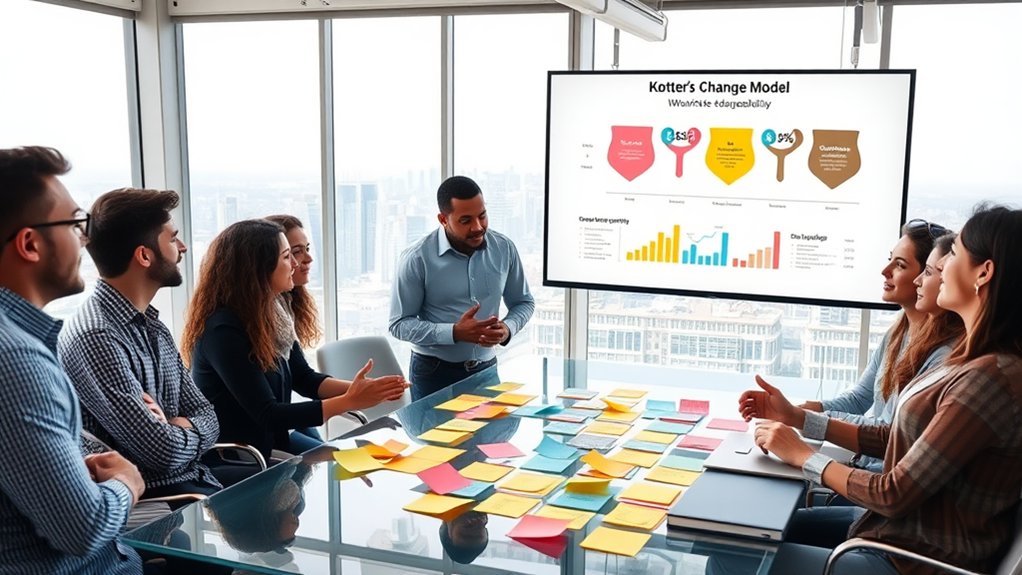
Kotter’s 8-Step Change Model begins by emphasizing the criticality of establishing a sense of urgency to motivate workforce adaptability. This initial step is strategically complemented by building a guiding coalition, which serves as a collaborative force to steer the change process. Together, these foundational steps lay the groundwork for effective change management, ensuring alignment and momentum throughout the organization. Additionally, integrating effective goal-setting methods into the change process can significantly enhance clarity and performance, further supporting the organization’s adaptability.
Establishing Urgency Importance
Urgency acts as a catalyst for transformation within organizations, serving as the first crucial step in Kotter’s 8-Step Change Model. Strategic change communication is essential in articulating the need for transformation and fostering employee engagement. Without a shared sense of urgency, efforts may falter, leading to stagnation. Understanding one’s own communication style can further enhance the effectiveness of this process, as seen in the DISC framework’s approach to improving interpersonal relationships.
| Step | Key Action | Outcome |
|---|---|---|
| 1 | Communicate urgency | Heightened awareness |
| 2 | Engage stakeholders | Collective momentum |
| 3 | Identify challenges | Targeted responses |
| 4 | Foster commitment | Sustained engagement |
It is clear that instilling urgency helps align the workforce towards a common vision. By strategically engaging employees, organizations can build a responsive culture. This collaborative approach guarantees that change initiatives gain traction, paving the way for successful adaptation.
Building a Guiding Coalition
A critical component of successful organizational change is building a guiding coalition, a diverse group that possesses the influence and commitment necessary to drive the change initiative forward.
This coalition should encapsulate varied expertise and perspectives to foster effective team dynamics, which are pivotal in addressing the multifaceted challenges of change. Leadership alignment within this group guarantees a unified direction and reinforces the change vision.
Strategically, selecting members who are respected across the organization enhances credibility and facilitates broader acceptance among employees. The guiding coalition must also engage collaboratively to harness its collective strengths, guaranteeing that the change efforts are resilient and adaptable.
A key element of forming such a coalition is understanding the role of environment in shaping behaviors, as it can significantly influence the group’s effectiveness in promoting change.
Ultimately, this coalition acts as both a catalyst and a stabilizer, promoting sustained momentum throughout the change process.
Lewin’s Change Management Model
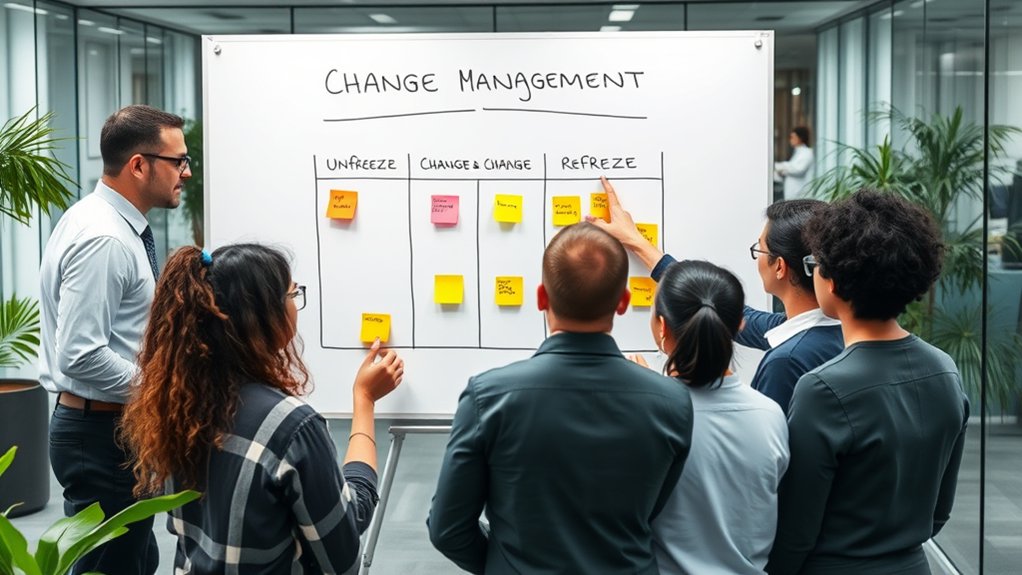
Lewin’s Change Management Model provides a foundational framework for facilitating organizational transformation through its Unfreeze-Change-Refreeze process. This model strategically addresses the critical challenge of overcoming resistance by initially disrupting the status quo, guiding the shift, and solidifying new behaviors. The approach is similar to SMART Goals Fail strategies, which emphasize aligning personal and corporate objectives for sustainable success.
Unfreeze-Change-Refreeze Process
To effectively navigate organizational change, the Unfreeze-Change-Refreeze process offers a strategic framework that emphasizes adaptability and preparedness. This model, conceptualized by Kurt Lewin, is instrumental in guiding organizations through shifts. Initially, unfreeze techniques are employed to dismantle existing structures and mindsets, paving the way for transformation. This stage requires careful analysis and collaboration to identify and address entrenched behaviors and resistances, guaranteeing a smooth shift into the change phase. During the change phase, new processes and attitudes are implemented with strategic precision, fostering innovation and engagement. Finally, refreeze strategies are essential in solidifying new practices, embedding them into the organizational culture to guarantee sustainability. This cyclical approach guarantees that change is not only embraced but also sustained over time. An example of fostering innovation and engagement can be seen in how Amazon Prime provides added value to members through benefits like fast, free delivery and streaming services.
Overcoming Resistance Strategies
Steering through the complexities of organizational change demands effective strategies to overcome resistance, a common barrier identified in Lewin’s Change Management Model. Central to this approach is fostering employee engagement through clear communication strategies and leadership involvement. This guarantees alignment with organizational culture and builds trust. Training programs equip employees to adapt, while feedback mechanisms offer insights into resistance points. Leaders act as change champions, exemplifying commitment and facilitating cultural alignment. Trust building is critical, requiring consistent, transparent communication and responsiveness to employee concerns. Through strategic collaboration, organizations can effectively navigate resistance, guaranteeing smoother shifts. To achieve lasting success, organizations may benefit from goal setting techniques to align individual aspirations with broader organizational objectives, fostering a path to collective joy and prosperity.
McKinsey 7-S Framework
The McKinsey 7-S Framework is a strategic tool that analyzes organizational effectiveness through seven interconnected elements: strategy, structure, systems, shared values, style, staff, and skills. This model fosters organizational alignment, guaranteeing that each element harmonizes for ideal strategy implementation. It provides a thorough view, aiding organizations in pinpointing misalignments and enhancing adaptability. A helpful resource for leaders interested in personal growth and organizational alignment is John C. Maxwell’s teachings as featured in his book “A Leader’s Heart.” The framework’s collaborative nature helps organizations evaluate how these elements interact, guaranteeing a cohesive approach to change readiness. By examining these components, businesses can strategically adapt, aligning internal practices with external demands. This guarantees that workforce adaptability is not only possible but systematically ingrained in the organizational fabric.
| Element | Focus Area |
|---|---|
| Strategy | Direction and scope |
| Structure | Organizational design |
| Systems | Procedures and processes |
| Shared Values | Core organizational beliefs |
Bridges’ Transition Model
While managing organizational change, Bridges’ Shift Model offers a nuanced perspective by focusing on the psychological journey of individuals experiencing change.
This model delineates three essential shift phases: Ending, Losing, and Letting Go; The Neutral Zone; and The New Beginning. Each phase requires strategic employee engagement to navigate effectively.
In the initial phase, employees confront the end of the old ways, necessitating clear communication to mitigate resistance.
The Neutral Zone is a period of ambiguity where fostering collaboration and supporting employees is vital to maintaining productivity.
Finally, The New Beginning phase emphasizes embracing new roles and behaviors, which can be bolstered by celebrating milestones and reinforcing shared goals.
Burke-Litwin Change Model
Recognized for its thorough approach to organizational transformation, the Burke-Litwin Change Model serves as a strategic framework that links external environmental factors to internal organizational dynamics. It emphasizes the importance of leadership alignment and organizational culture in driving effective change. The model identifies 12 interconnected variables, illustrating how shifts in the external environment can influence internal processes and performance.
| Element | Description |
|---|---|
| External Environment | Influences from outside the organization |
| Leadership | Alignment of vision and direction |
| Organizational Culture | Shared values and norms |
| Performance | Outcome of change initiatives |
Prosci’s Change Management Methodology
Building upon the thorough insights provided by the Burke-Litwin Change Model, Prosci’s Change Management Methodology offers a structured approach to facilitating organizational transformation through individual change.
This methodology emphasizes the importance of Prosci principles, which are designed to address the human side of change. It stresses the significance of change sponsorship, recognizing that effective leadership support is essential for successful adaptation.
By focusing on strategic alignment and collaborative efforts, Prosci’s framework guarantees that change initiatives are not only implemented effectively but also embraced by the workforce.
The method’s analytical nature allows organizations to systematically assess readiness and address resistance, thereby enhancing adaptability. This approach positions organizations to navigate complex shifts while maintaining operational continuity and achieving desired outcomes.
Final Thoughts
In the garden of organizational change, each model acts as a distinct tool for cultivation. ADKAR plants the seeds of awareness and desire, while Kotter’s 8-Step Model nurtures them through structured progression. Lewin’s Model reshapes the soil, fostering adaptability, and McKinsey’s 7-S Framework aligns essential elements like sunlight and water. Bridges’ Change Model guides through seasonal shifts, as the Burke-Litwin Model roots transformation in deeper layers. Prosci’s Methodology offers the gardener a thorough blueprint, ensuring sustainable growth.