The Compliance Clock
AI governance is becoming a calendar, not a slogan. Boards that treat AI as tooling will miss the deadline. Boards that treat AI as an operating cadence will meet it.
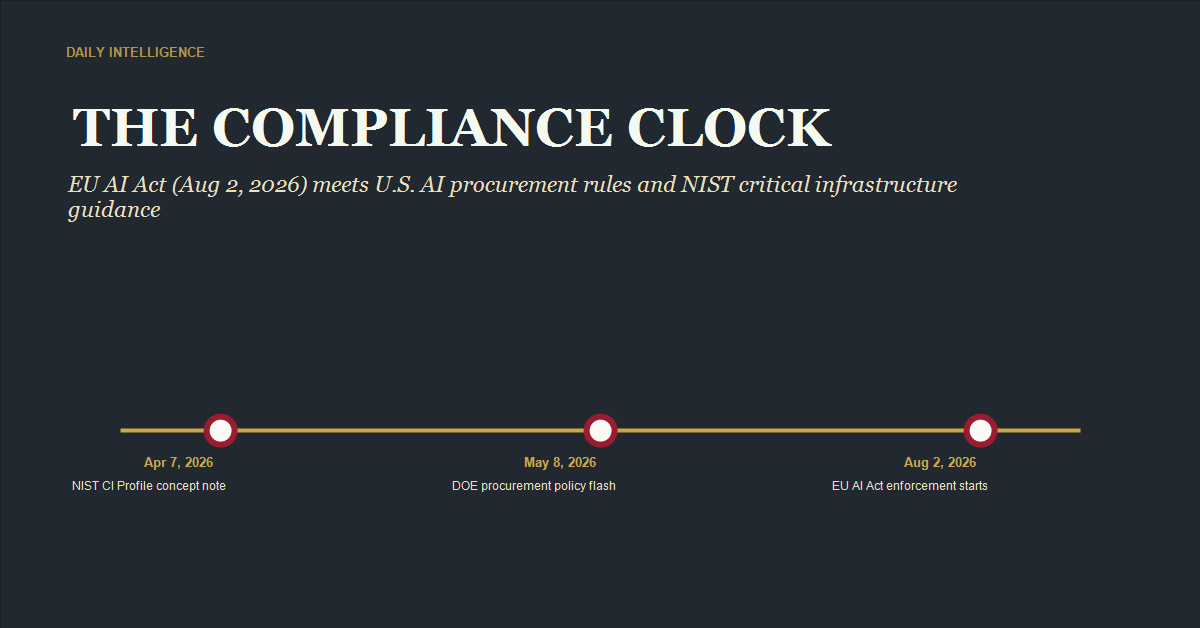
Daily Intelligence for Wednesday, May 13, 2026. Three primary-source signals, one board-level implication: AI governance has entered the enforcement calendar.
Three dates every board should put on the calendar
Most executive teams still speak about AI in terms of tools, pilots, and productivity. Regulators are now speaking in terms of obligations, documentation, and deadlines.
This week, three separate governance lanes made the same move: they pulled AI out of generic ethics language and into operational requirements a buyer can audit.
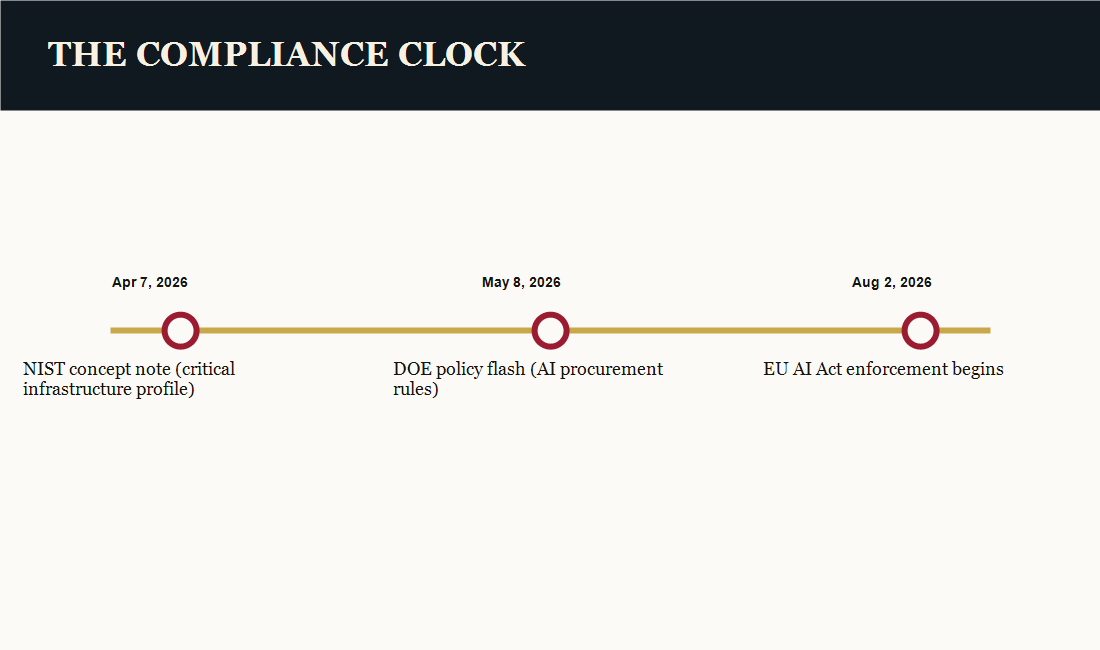
1. April 7, 2026: NIST signaled where critical infrastructure expectations are likely to land, including governance and risk practices that must be demonstrable, not merely asserted.
2. May 8, 2026: U.S. federal procurement moved from aspiration to requirements. If procurement demands documentation, the operating model follows procurement.
3. August 2, 2026: EU AI Act begins applying at scale. Whatever your view of the law, a date on the calendar changes behavior. Compliance becomes a program with owners, artifacts, and reviews.
Procurement rules are governance rules in disguise
Boards often treat procurement as a purchasing function. In the AI era, procurement becomes a governance lever because it can force the enterprise to standardize model selection, controls, and evidence.
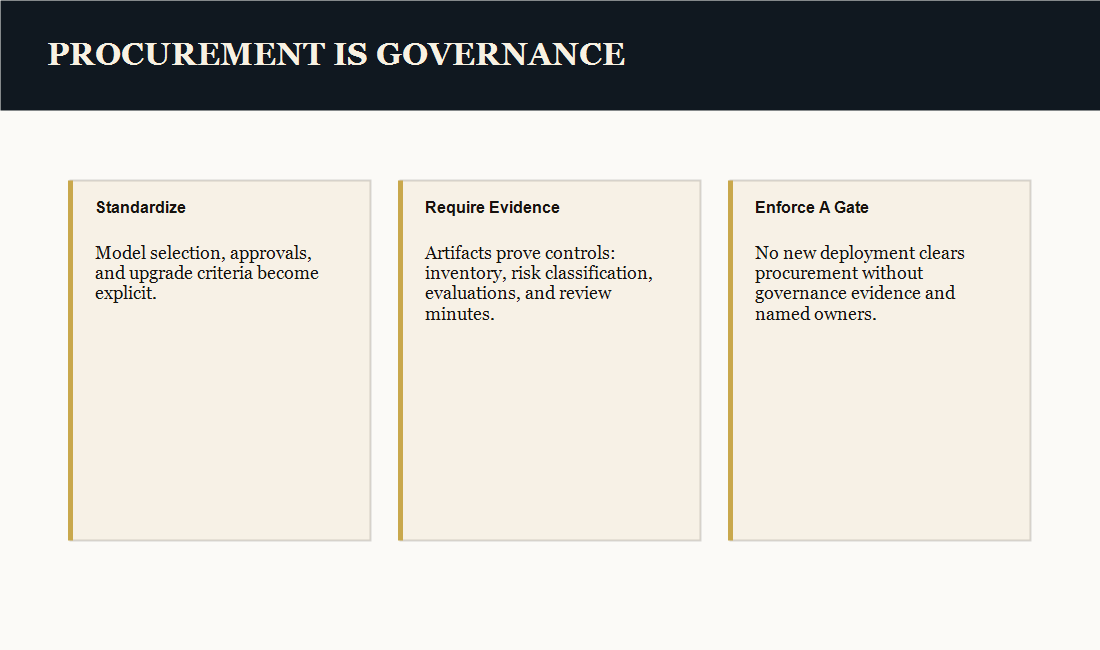
The practical shift is simple: once a regulator, auditor, or procurement regime expects a document, the organization must produce that document consistently. That is culture. That is cadence. That is not a one-time policy PDF.
If the enterprise is buying or building AI systems without repeatable evidence, it is buying exposure.
The move: build an auditable operating cadence
Do not start with a vendor checklist. Start with the cadence your board can stand behind.
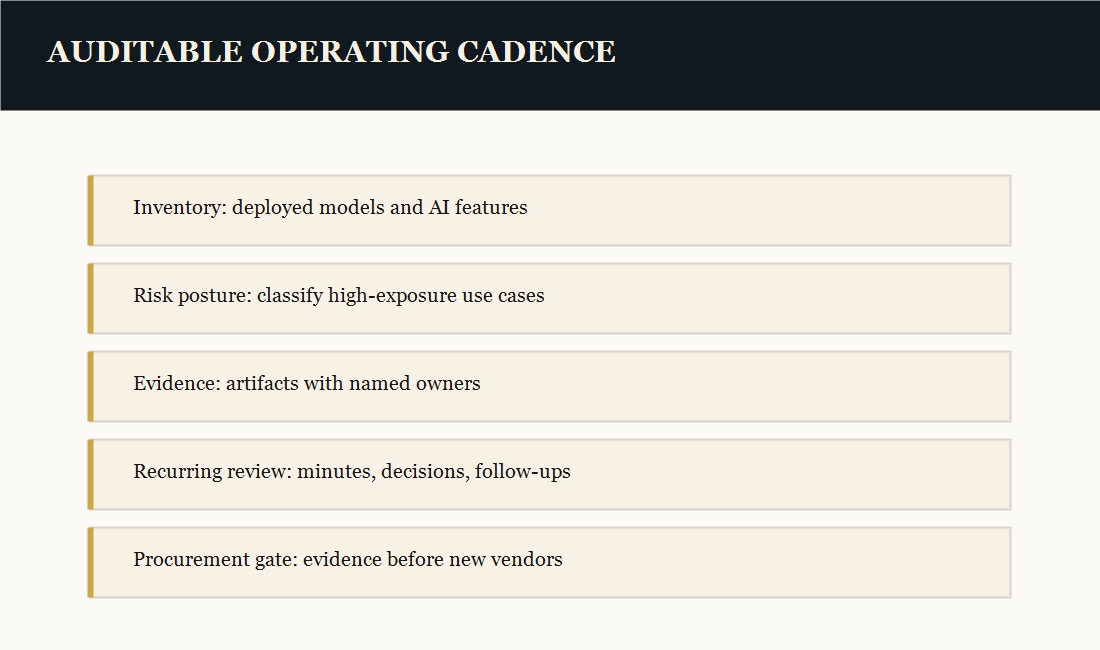
Minimum board-grade cadence for the next 90 days:
- Inventory: what models, tools, and AI features are deployed where decisions are made.
- Risk posture: classify the handful of AI uses that can create regulatory or reputational harm.
- Evidence: define the artifacts that prove controls are real, then assign owners.
- Review: set a recurring executive review that produces minutes, decisions, and follow-ups.
- Procurement gate: require governance evidence before new AI vendors or major upgrades clear.
Sources (primary)
See the run package sources list for direct links and citations.
Sources (Primary)
# Sources (Primary)

This run is built on primary-source references and direct regulator/government materials.

1. NIST: Critical Infrastructure AI Profile (Concept Note), April 7, 2026.
2. U.S. Department of Energy: Policy Flash, May 8, 2026 (re: OMB memo M-26-04 and AI principles for procurement).
3. EU: Artificial Intelligence Act overview and implementation timeline (European Commission).

## Notes

- Competitor summaries are intentionally not used as lead sources.
- Any inference in the article is labeled as Touch Stone analysis, not presented as a quoted fact.

## Direct links

- NIST concept note (PDF): https://nvlpubs.nist.gov/nistpubs/ai/NIST.AI.1025.CIProfileConceptNote.pdf
- DOE policy flash (PDF): https://www.energy.gov/sites/default/files/2026-05/2026-05-08_OMB_M-26-04_AI_Policy_Flash.pdf
- European Commission AI Act overview: https://digital-strategy.ec.europa.eu/en/policies/regulatory-framework-ai
If your organization is deploying AI, you need a governance cadence your board can audit. The diagnostic takes under five minutes and identifies the most urgent intervention point in the CAIRO Framework.