
Intelligence
Constructed.
Strategic guidance for institutional leaders.
Group
Intelligence.
Collective Operational Clarity
Access the latest strategic briefings and high-level trends from our ongoing Mastermind Group sessions.
View Latest PostingsSector
Analysis.
Market Transition Patterns
In-depth mapping of physical and digital asset transitions across core industrial sectors.
Inspect DataMastermind
Group Archive.
Direct transparency into our group’s strategic discourse. Explore internal briefings, peer-level analysis, and the historical intelligence logs of the Mastermind Group.
Enter Group Archive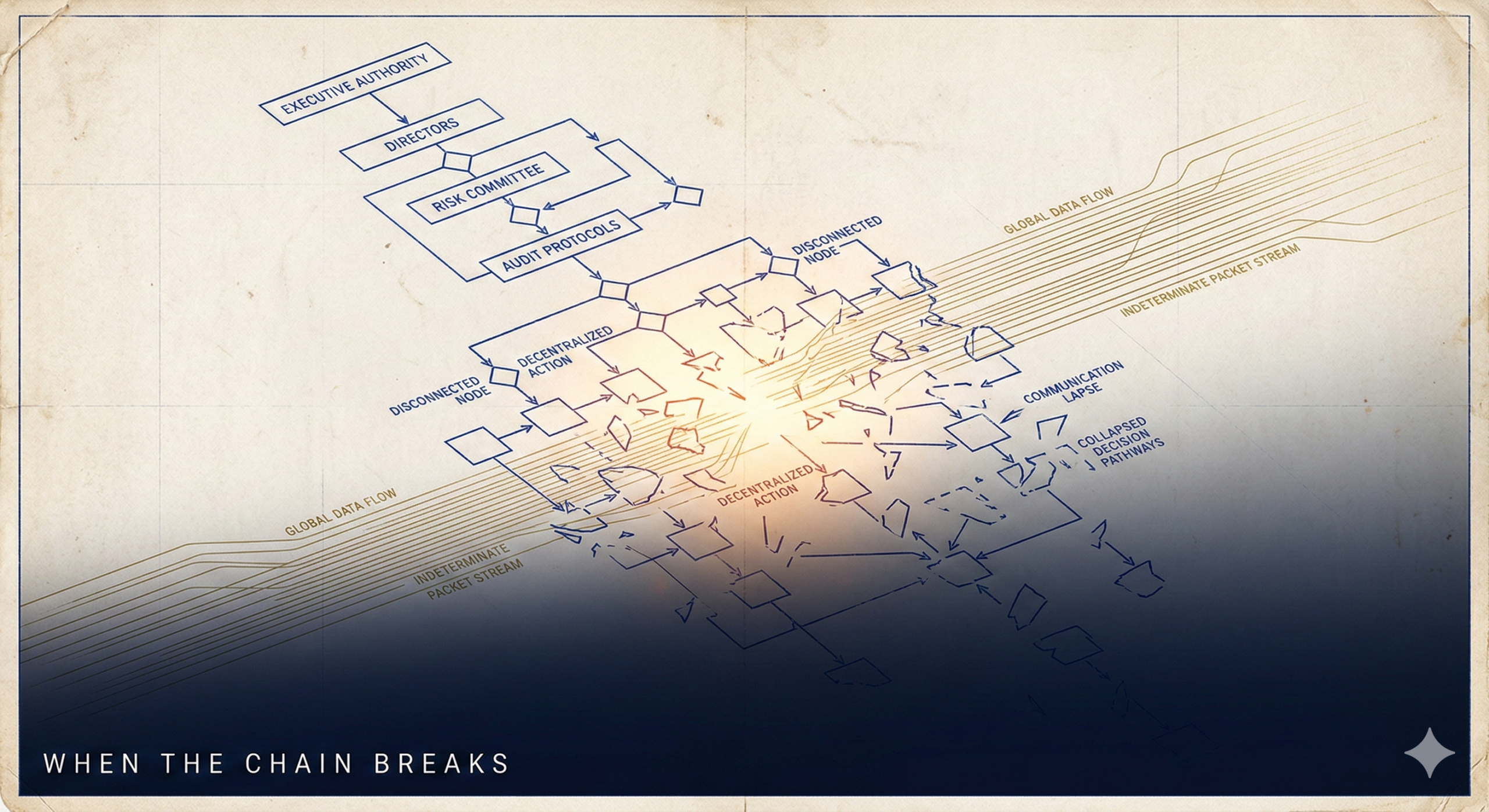
When the Chain Breaks:The Structural CollapseInside AI Governance Failure
Governance instruments built for human decision chains were never engineered for systems that execute at machine speed across thousands of simultaneous decision nodes.

The Structural Pivot: How Operation Epic Fury Extracted the Last Assumption of Energy Security
Barclays has repriced Brent crude to $100 per barrel. Kuwait has suspended its stock exchange. Three thousand flights have been grounded. The structural assumption that energy supply chains are self-correcting has been invalidated in 48 hours.

The Governance Gap
There is a structural failure mode that every board confronts when AI systems scale beyond the boundary of direct human supervision. It does not announce itself with a warning. It does not appear in the quarterly dashboard. It accumulates silently, in the gap between the decisions organizations believe they are making and the decisions autonomous systems are actually executing on their behalf. By the time the gap becomes visible, accountability has already dissolved.

Supreme Court Strikes Down IEEPA Tariffs, Triggering Unprecedented Trade Policy Chaos
1. The Signal In a landmark 6-3 decision on February 20, 2026, the U.S. Supreme Court declared President Trump’s use of the International Emergency Economic Powers Act (IEEPA) to impose sweeping global tariffs unconstitutional [1]. The ruling immediately invalidated the…
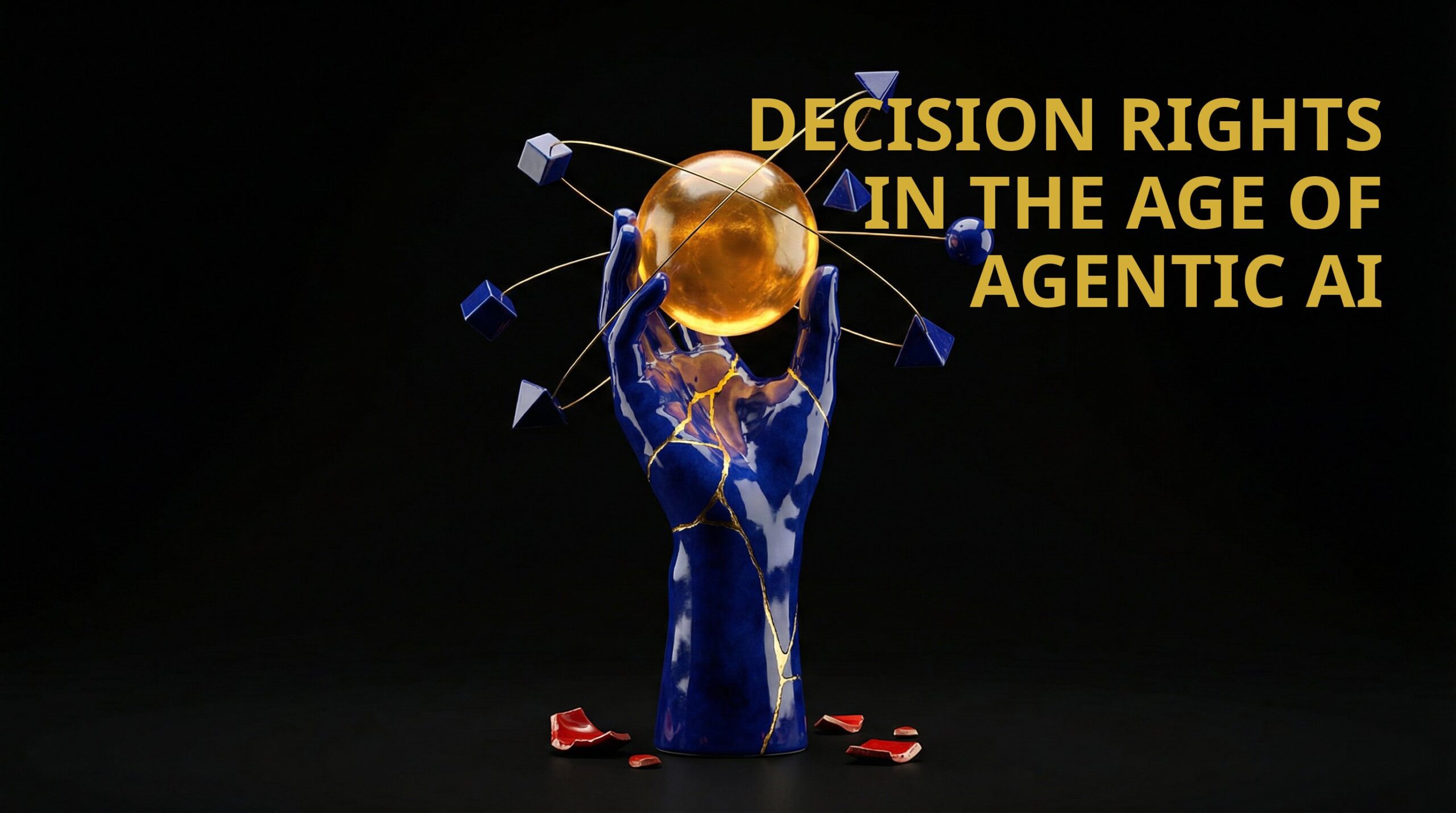
Decision Rights in the Age of Agentic AI
Agentic AI systems are making thousands of autonomous decisions per hour inside the enterprise, yet 95% of AI pilots never progress beyond the experimental stage. The organizations that will thrive are those that redesign their decision-rights architecture to define where humans decide, where machines decide, and where they decide together.
The 36% Problem: Why Most Boards are Failing Their Fiduciary Duty on AI
The 36% Problem: Why Most Boards Are Failing Their Fiduciary Duty on AI Category: Sector Intelligence | White Paper Alignment: The Board’s Fiduciary Obligation in AI Governance Published: February 21, 2026 | Touch Stone Publishers Sixty-four percent of…
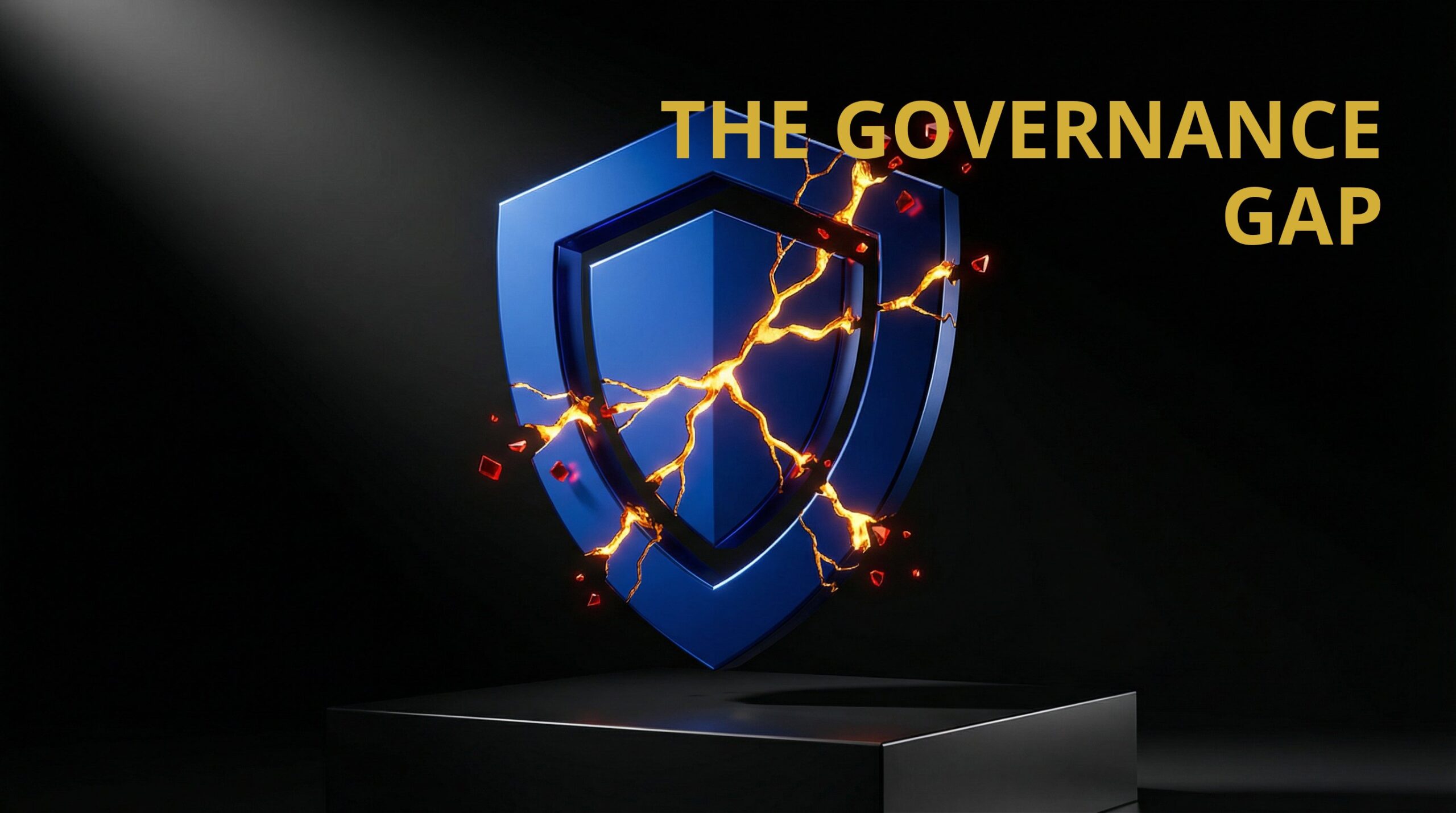
The Founder’s Ledger: The Governance Gap: Why AI Oversight Is Failing at Scale
Enterprise AI spending is set to exceed $2.5 trillion, yet governance maturity remains dangerously low. A 2000:1 spending disparity between AI adoption and AI oversight has created a new class of systemic risk that most boards are not equipped to manage.
The Founder’s Ledger: Decision Rights in the Age of Agentic AI
Agentic AI systems are making thousands of autonomous decisions per hour inside the enterprise, yet 95% of AI pilots never progress beyond the experimental stage. The organizations that will thrive are those that redesign their decision-rights architecture to define where humans decide, where machines decide, and where they decide together.
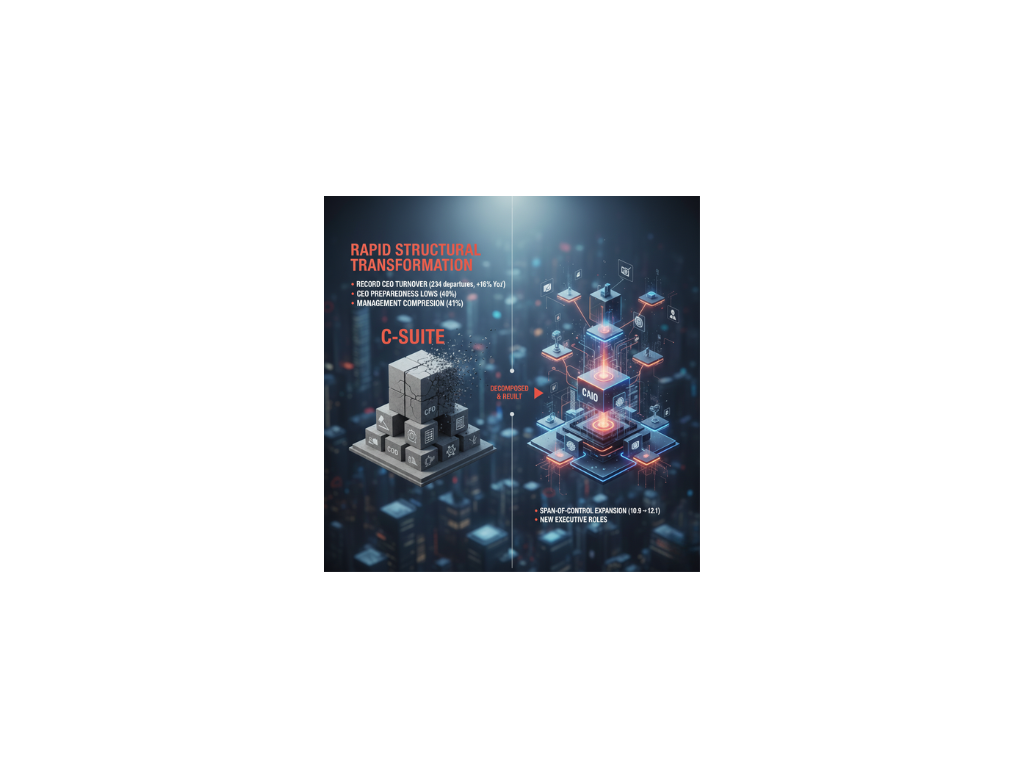
The Great Rewiring, A Forensic Map of the C-Suite in Decomposition
The C-suite as we have known it is undergoing the most rapid structural transformation since the multidivisional form replaced the unitary firm in the mid-twentieth century.
Record CEO turnover (234 departures, 16% YoY increase), CEO preparedness at historic lows (40% vs. 57% in 2023), management layer compression (41% of orgs reduced layers), span-of-control expansion (10.9 → 12.1 in one year), and the emergence of entirely new executive roles (CAIO) demonstrate that the C-suite is not being optimized—it is being decomposed and rebuilt.

The Power Problem: Who Governs When Intelligence Is Everywhere?
No single framework governs the redistribution of decision rights now underway across the global enterprise. Five competing models — from IBM’s identity-as-authority architecture to McKinsey’s board committee mandate to the World Economic Forum’s progressive governance framework — each address a fragment of the problem while leaving fundamental tensions unresolved. Meanwhile, 88% of organizations deploy AI, yet only 15% of S&P 500 companies provide board-level oversight. The Air Canada tribunal ruling has established that corporations cannot disown the decisions of their own intelligence. And as AI assumes 250% more decision-making authority over the next three years, the human cognitive faculties those decisions once sharpened are quietly atrophying. A forensic examination of the frameworks, the precedents, and the uncomfortable questions boards are not yet asking.
Deeper Analysis
Our LinkedIn newsletter brings valule to the table for Leaders. If these insights are relevant to your current priorities, I’d welcome your participation. You are more than welcome to write an article and share your thoughts.