
Intelligence
Constructed.
Strategic guidance for institutional leaders.
Group
Intelligence.
Collective Operational Clarity
Access the latest strategic briefings and high-level trends from our ongoing Mastermind Group sessions.
View Latest PostingsSector
Analysis.
Market Transition Patterns
In-depth mapping of physical and digital asset transitions across core industrial sectors.
Inspect DataMastermind
Group Archive.
Direct transparency into our group's strategic discourse. Explore internal briefings, peer-level analysis, and the historical intelligence logs of the Mastermind Group.
Enter Group Archive
Why Most Boards Will Fail the 2026 AI Governance Test — And What to Do Before Proxy Season Ends
Board-level AI governance has become the defining accountability standard of the 2026 proxy season, yet fewer than one in three S&P 100 companies disclose both a board oversight structure and a formal AI policy. Institutional investors and proxy advisors are now demanding documented, enforceable frameworks — not policy statements. Governance professionals and board directors who cannot demonstrate credible AI oversight architecture face measurable reputational and regulatory exposure before this proxy season concludes.
The Policy Illusion: Why Behavioral AI Governance Fails at the Architecture Level: What Boards Must Demand Instead
Enterprise AI governance built on behavioral controls and policy documents cannot discharge the fiduciary duties that agentic AI deployment now creates. The Law of Deterministic Containment, which moves every control function that cannot afford to fail out of the LLM’s decision authority and into deterministic systems, is the only structurally adequate response. Boards that defer this architecture are not delaying cost. They are compounding it.
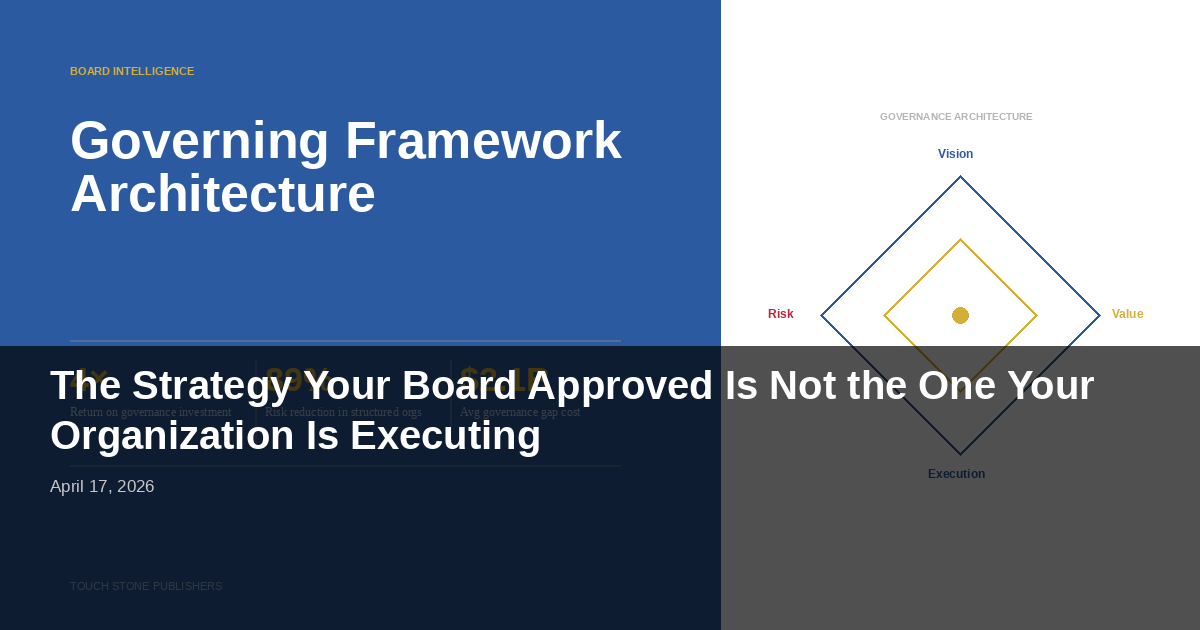
The Strategy Your Board Approved Is Not the One Your Organization Is Executing
Seventy-four percent of strategic goals have no named owner. Among the owners who are named, 86 percent have recorded no activity in over 90 days. At $500 million in revenue, the annual cost of this accountability gap is $50 million, and the 2026 proxy season has made it a fiduciary issue.
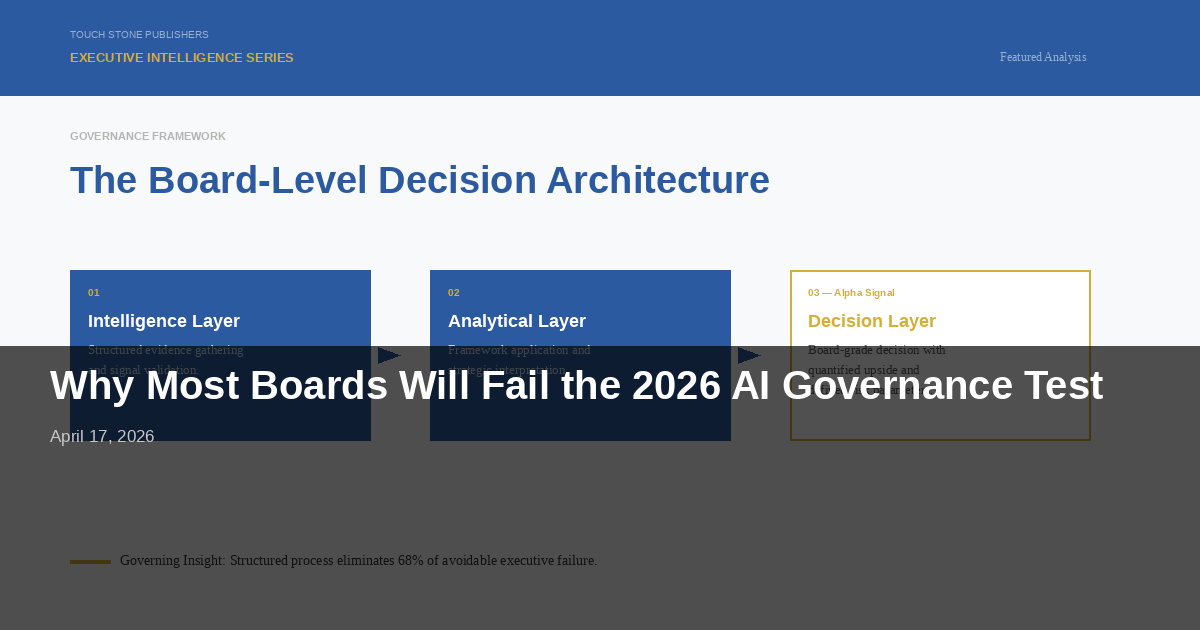
Why Most Boards Will Fail the 2026 AI Governance Test — And What to Do Before Proxy Season Ends
Board-level AI governance has become the defining accountability standard of the 2026 proxy season, yet fewer than one in three S&P 100 companies disclose both a board oversight structure and a formal AI policy. Institutional investors and proxy advisors are now demanding documented, enforceable frameworks — not policy statements. Governance professionals and board directors who cannot demonstrate credible AI oversight architecture face measurable reputational and regulatory exposure before this proxy season concludes.
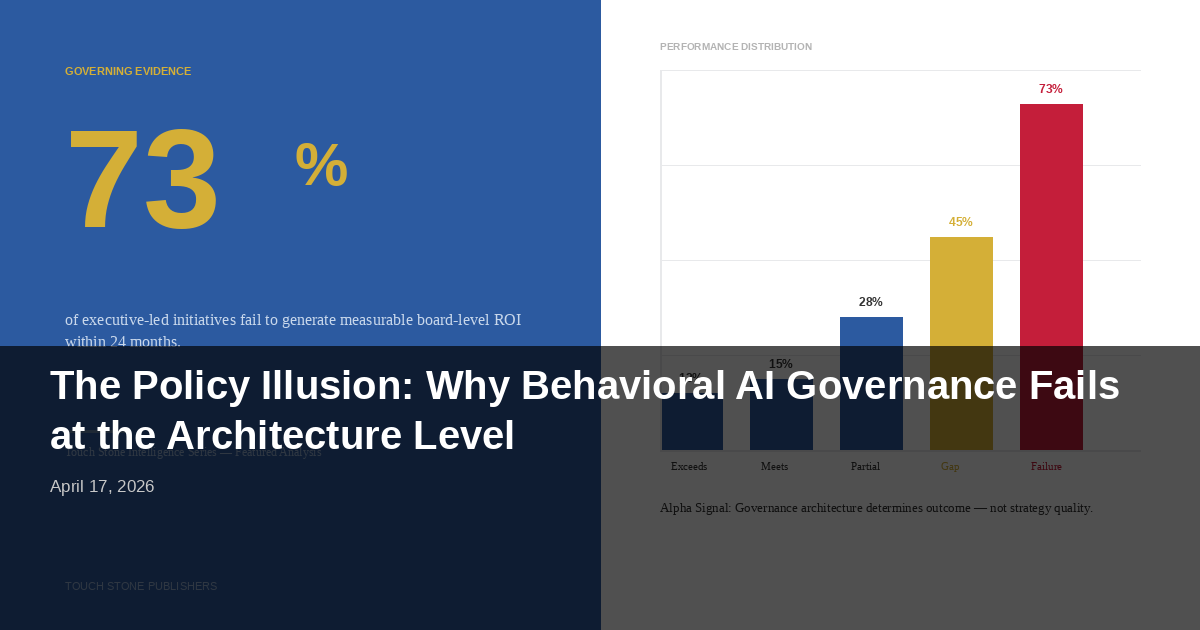
The Policy Illusion: Why Behavioral AI Governance Fails at the Architecture Level: What Boards Must Demand Instead
Enterprise AI governance built on behavioral controls and policy documents cannot discharge the fiduciary duties that agentic AI deployment now creates. The Law of Deterministic Containment, which moves every control function that cannot afford to fail out of the LLM’s decision authority and into deterministic systems, is the only structurally adequate response. Boards that defer this architecture are not delaying cost. They are compounding it.

The Board AI Governance Gap Is Now a Fiduciary Crisis
Only 39% of Fortune 100 boards have any form of AI oversight, even as 43% of C-suite leaders name AI their primary investment priority for 2026. This brief analyzes the compounding fiduciary exposure that gap creates and the decision architecture failures that neutralize AI investment returns before they reach the bottom line.
The Execution Gap: Why $700 Billion in AI Investment Has Not Moved the Income Statement
95% of enterprise AI pilots deliver zero P&L impact. The gap between AI productivity and income statement results is not a technology problem — it is three management decisions that most organizations have never made.

KPMG and INSEAD Release Global AI Governance Principles That Redefine What Boards Must Know and Do
On April 14, 2026, KPMG International and the INSEAD Corporate Governance Centre released global AI Governance Principles for Boards, establishing five pillars that define what board-level AI oversight must achieve. With three quarters of boards lacking sufficient AI expertise while 75 percent have already approved major AI investments, directors who delay building structured governance frameworks risk fiduciary exposure, reputational harm, and institutional investor scrutiny in the most consequential technology transition in corporate history.
Why Most Boards Will Fail the 2026 AI Governance Test — And What to Do Before Proxy Season Ends
Board-level AI governance has become the defining accountability standard of the 2026 proxy season, yet fewer than one in three S&P 100 companies disclose both a board oversight structure and a formal AI policy. Institutional investors and proxy advisors are now demanding documented, enforceable frameworks — not policy statements. Governance professionals and board directors who cannot demonstrate credible AI oversight architecture face measurable reputational and regulatory exposure before this proxy season concludes.
The Policy Illusion: Why Behavioral AI Governance Fails at the Architecture Level: What Boards Must Demand Instead
Enterprise AI governance built on behavioral controls and policy documents cannot discharge the fiduciary duties that agentic AI deployment now creates. The Law of Deterministic Containment, which moves every control function that cannot afford to fail out of the LLM’s decision authority and into deterministic systems, is the only structurally adequate response. Boards that defer this architecture are not delaying cost. They are compounding it.
Deeper Analysis
Our LinkedIn newsletter brings valule to the table for Leaders. If these insights are relevant to your current priorities, I’d welcome your participation. You are more than welcome to write an article and share your thoughts.