
Intelligence
Constructed.
Strategic guidance for institutional leaders.
Group
Intelligence.
Collective Operational Clarity
Access the latest strategic briefings and high-level trends from our ongoing Mastermind Group sessions.
View Latest PostingsSector
Analysis.
Market Transition Patterns
In-depth mapping of physical and digital asset transitions across core industrial sectors.
Inspect DataMastermind
Group Archive.
Direct transparency into our group's strategic discourse. Explore internal briefings, peer-level analysis, and the historical intelligence logs of the Mastermind Group.
Enter Group Archive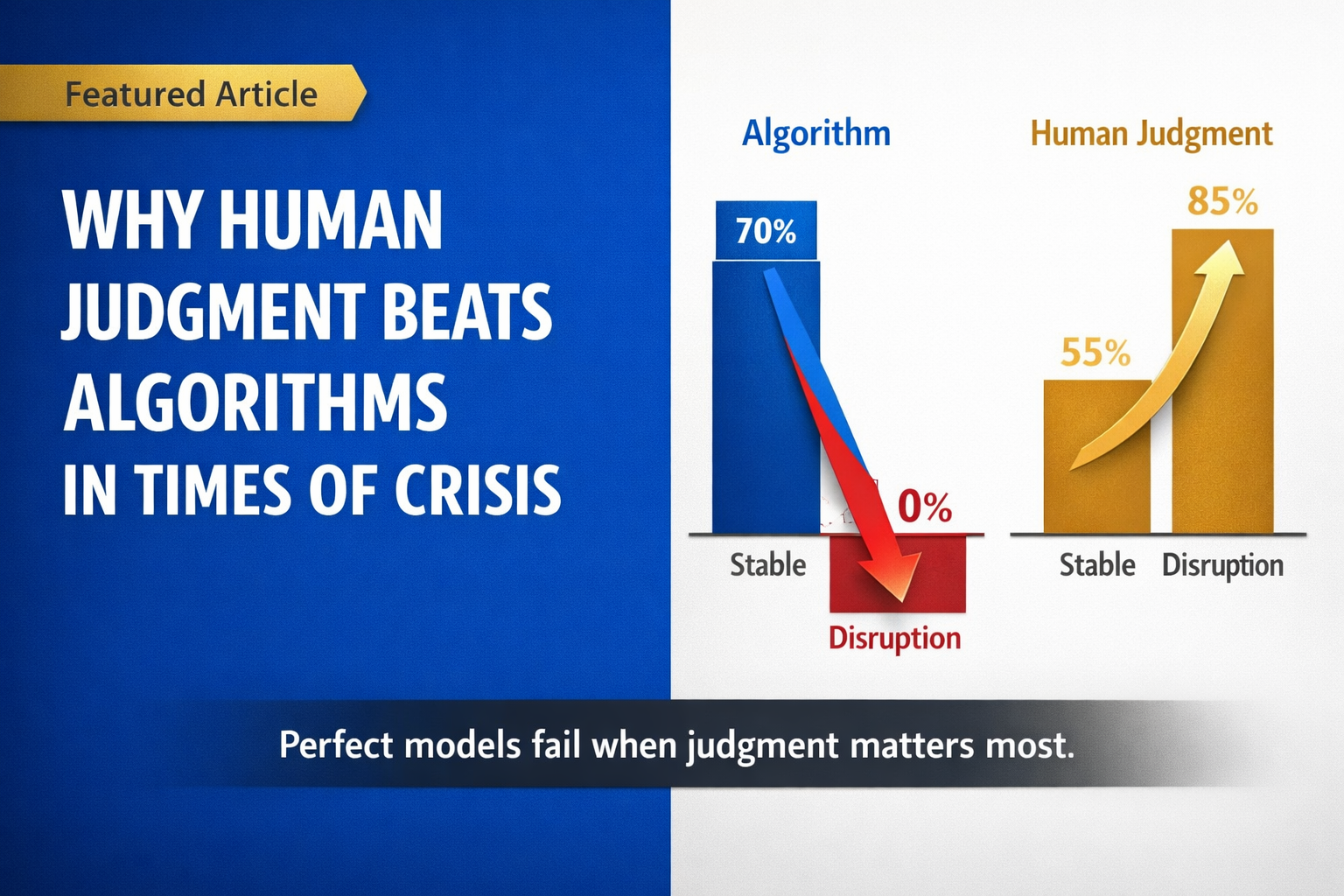
CEO Judgment in the Age of Simulation
Digital tools designed to eliminate judgment error have created a new category of institutional risk. Most boards believe algorithmic decision-making reduces bias and improves outcomes. They’re wrong about what happens next. Digital twins outperform human judgment by 60-70% in stable conditions—then comes the disruption. When a genuine black swan event occurs, the systems that were 100% reliable collapse entirely. Worse: boards that outsource judgment to algorithms lose the capacity to recognize when models stop working. This is institutional dependency disguised as governance. The question for your board is not whether to adopt algorithmic systems. The market won’t permit that choice. The question is whether you’ll preserve the cognitive authority to override them when conditions shift.

Wartime Stagflation Vise
The Federal Reserve’s March 18 rate decision signals a structural pivot: the Iran war energy shock has trapped monetary policy between fighting 3.1% inflation and preventing a recession triggered by 92,000 job losses.
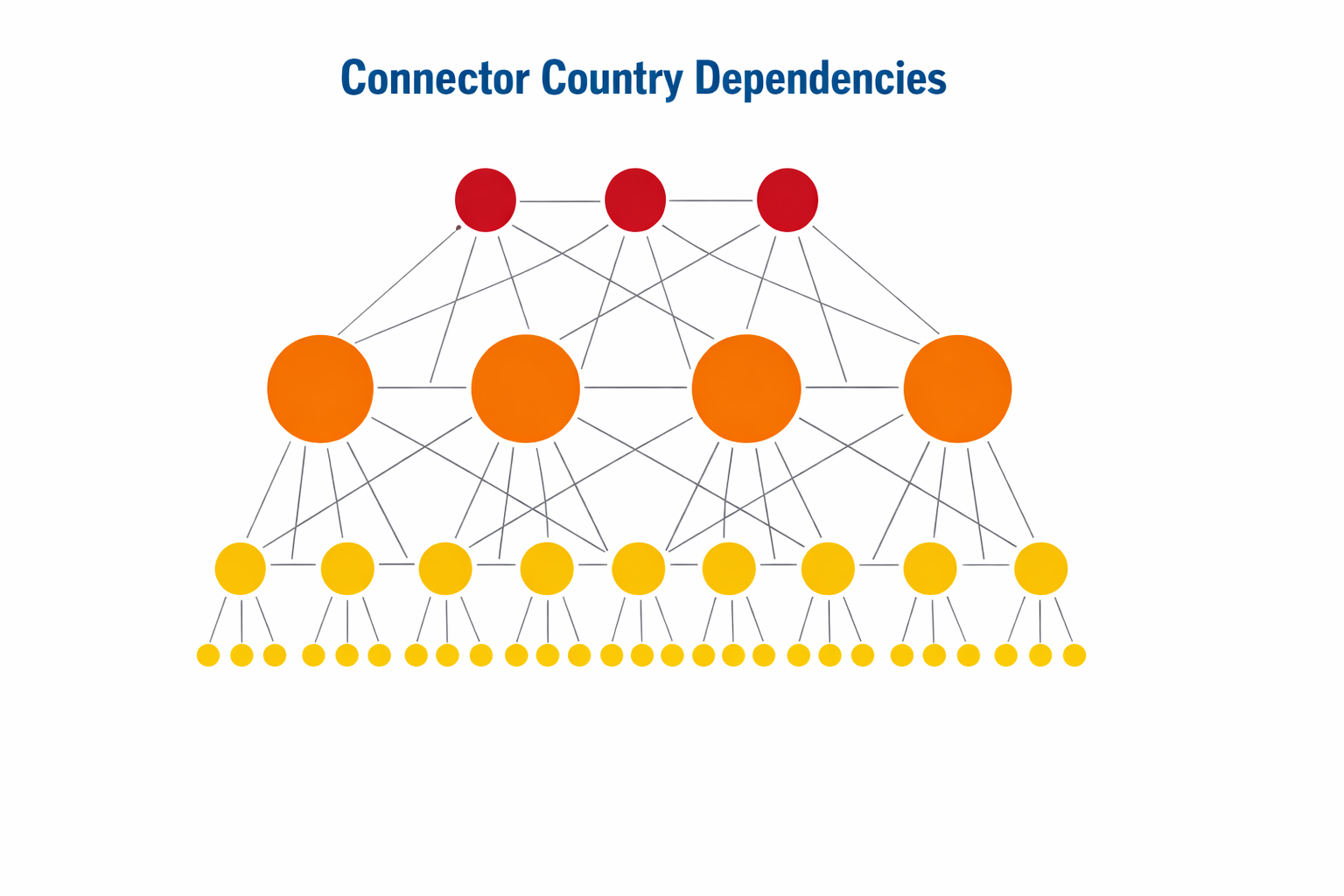
THE GEOPOLITICAL ALPHA THESIS
73% of global trade now routes through connector countries—neutral intermediaries positioned between competing blocs. Yet only 18% of C-suite executives have mapped this exposure. The gap between perception and reality is where $200M-$440M supply chain disruptions originate.
U.S.-China bilateral trade declined 45% since 2018. Boards celebrated de-risking success. Reality: total trade volume declined only 7%. Supply chains didn’t bifurcate into isolated blocs—they re-routed through Vietnam, Mexico, India, Thailand, Poland. Organizations didn’t eliminate China exposure. They added opacity.
Standard risk assessments map Tier 1 exposure (direct adversarial procurement). They systematically miss Tier 2 (connector countries where >50% of inputs originate from adversarial states) and Tier 3 (connector countries vulnerable to adversarial coercion). A U.S. company importing solar panels from Malaysia believed it had de-risked from China. Reality: 78% of Malaysian inputs originated in China. U.S. Department of Commerce anti-circumvention investigation imposed retroactive tariffs. $850M in procurement disrupted overnight.
The Connector Country Dependency Matrix quantifies what boards cannot see. Organizations implementing CCDM prevent $200M-$440M disruptions competitors absorb. ROI: $25M investment generates $95M+ three-year value. The question: Can your board quantify connector dependencies before enforcement materializes?
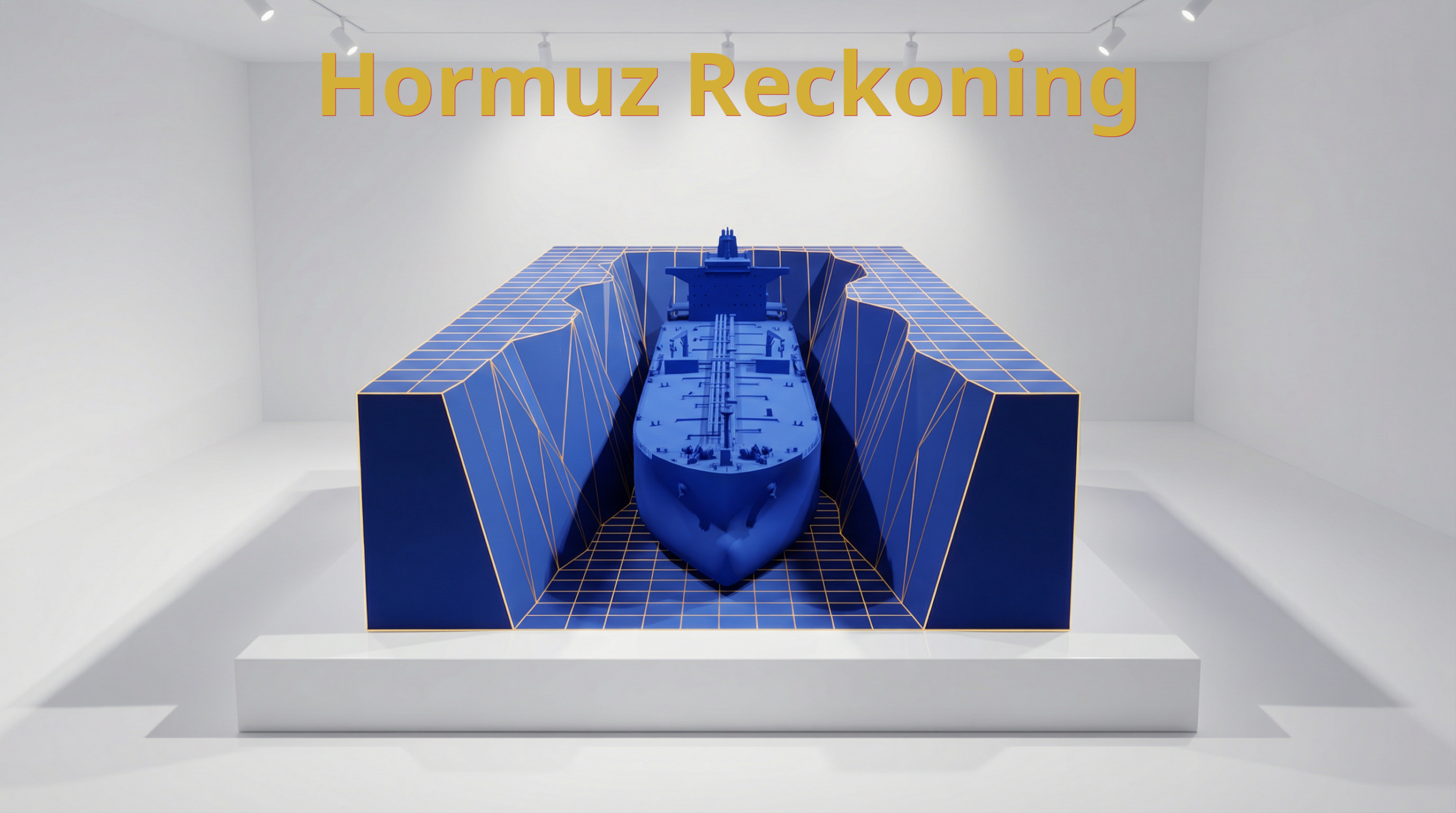
Hormuz Reckoning: The Largest Oil Shock in History Forces a Central Bank Crisis
The largest oil supply disruption in market history is forcing seven central banks into a simultaneous policy crisis this week. With Brent above $106, strategic reserves covering only 25 days of disrupted flow, and the Fed’s projections due Wednesday, the Strait of Hormuz closure has Invalidated every energy security assumption underpinning the post-Cold War economic order.

The Geopolitical Alpha Thesis: Why Fragmentation Rewards Structure Over Hope
Fortune 500 boards treat geopolitical fragmentation as a defensive liability requiring hope that tensions de-escalate. This assumption is catastrophically wrong. Geopolitical fragmentation is the largest structural arbitrage opportunity of the decade—and the organizations with systematic frameworks will dominate it.
Intel extracted $52 billion through Sovereignty Arbitrage. TSMC extracted $40 billion. Competitors accepting passive site selection left equivalent value on the table. Yet 78% of Fortune 500 firms still treat geopolitical risk as purely defensive cost absorption rather than capital structure opportunity.
The Geopolitical Alpha Thesis operates on four structural pillars: mapping connector country dependencies that standard risk assessments miss (preventing $200M-$440M disruptions), forecasting ideology-driven state behavior that economic models systematically misprice (avoiding $100M+ capital allocation errors), extracting Sovereignty Premiums from competing jurisdictions ($180M-$420M per major investment), and managing workforce polarization before it escalates to activism crises ($50M-$573M prevented losses).
The choice facing boards is binary: continue treating fragmentation as unmanageable headwind, or recognize it as systematic value creation requiring frameworks. The organizations choosing the former will survive. The organizations choosing the latter will dominate.

The Hormuz Shock: Repricing the 2026 Global Economic Outlook
The effective closure of the Strait of Hormuz has triggered the largest oil supply disruption in history, sending Brent crude past $100 and forcing a structural pivot toward a stagflationary global regime.

Hormuz Chokepoint: The Largest Oil Supply Disruption in History
The largest oil supply disruption in history has arrived. With Strait of Hormuz flows collapsing from 20 mb/d to near-zero, Brent crude breaching $100, and the IEA’s record 400-million-barrel emergency release failing to stabilize markets, boards must now confront a structural shift in global energy architecture that cascades across every sector.

Hormuz Fracture: The Convergence of Energy Dislocation and Stagflation
The effective closure of the Strait of Hormuz has triggered the most severe energy dislocation since 1973, forcing the IEA to prepare its largest-ever strategic reserve release while the US economy simultaneously signals stagflation. Boards must now price a world where energy supply is a function of military outcomes, not market mechanics.
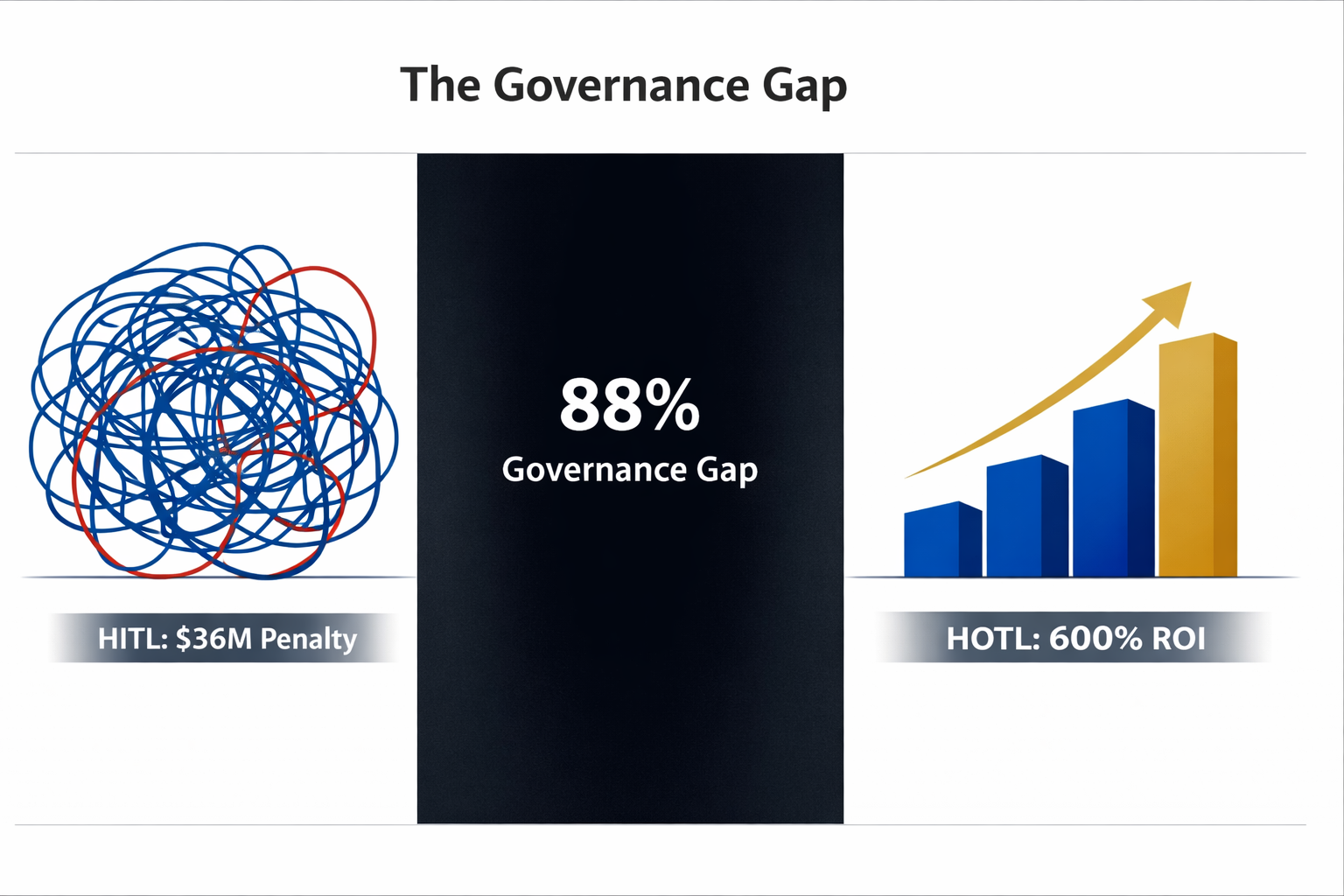
The Governance Gap: Why 88% of AI Deployments Operate Without Board Oversight—And What That Means for Fiduciary Duty
The pattern repeats across sectors: An enterprise deploys AI-assisted operations. Individual productivity increases 40%. Six months later—higher turnover, degraded customer satisfaction, escalating compliance violations. The AI succeeded. The architecture failed. And the board had no monitoring system to see it coming.
88% of US Fortune 1000 enterprises deploying AI systems lack board-level governance policies. This 63-percentage-point gap between deployment and oversight represents the largest unaddressed fiduciary exposure in modern enterprise governance. Organizations implementing Human-in-the-Loop models achieve individual gains while creating $30-40M annual operational drag through decision fatigue, brand inconsistency, and cognitive overload.
The solution requires architectural migration from human approval bottlenecks to Policy-as-Code governance—enabling autonomous operations at machine speed while maintaining board-level precision control. Organizations that recognize this distinction capture 600-850% ROI. Those that don’t will discover they’ve perfected an obsolete model.

The Myth of the Self-Governing Boundary
Boards are approving transformation velocity without the governance instrument required to govern what that velocity is permitted to consume. The organizational core designated as sustainable is being degraded by the execution architecture the board approved to protect it. The governance gap is not detectable on standard dashboards until capability degradation is already entrenched — at which point no post-incident governance review can retroactively cure it.
Deeper Analysis
Our LinkedIn newsletter brings valule to the table for Leaders. If these insights are relevant to your current priorities, I’d welcome your participation. You are more than welcome to write an article and share your thoughts.